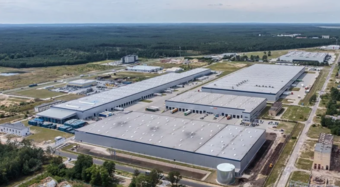
In the increasingly fierce competition with Poland, Slovakia or Hungary for the construction of industrial sites, including those of the strategic gigafactory type, the Czech Republic can shoot itself in the foot. In the Chamber of Deputies is a proposal for an amendment to the law of the Ministry of the Environment, which is to prohibit the construction of warehouses, shops and solar power plants on the highest quality agricultural land. Although the regulation does not explicitly mention production facilities, they cannot do without warehouse space and the tightening would also affect them. None of the countries of the European Union has such strict regulation
From logistics service providers to manufacturing companies. This is how industrial demand changed last year, according to CBRE, a world leader in commercial real estate services. Manufacturing companies, with their 53% share in total demand, achieved a year-on-year increase of 22 percentage points. A similar trend can be expected this year as well. Demand will be primarily driven by companies linked to the automotive and electronics industries.
The results, together with the recommendations, will serve to further improve measures for effective rainwater management in other industrial parks throughout the Czech Republic.
The largest number of buildings was built in the Karlovy Vary region, and the total volume in the Czech Republic reached 11.7 million m². On the other hand, demand weakened throughout the year and the vacancy rate increased by 94 basis points year-on-year to 1.74%, representing 205,500 m² of immediately available industrial or warehouse space. The highest attainable rent, the so-called "prime rent", decreased slightly at the beginning of the year and for the rest of 2023 it stabilized at the level of €7.50-7.70/m²/month. That's according to a survey by Colliers, a leading provider of diversified professional services in commercial real estate and investment management.
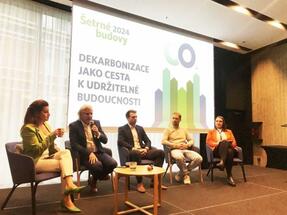
The broad and increasingly "hot" topic of a sustainable approach to the construction and operation of residential and non-residential construction was addressed from many different points of view by the participants of Monday's Sustainable Buildings 2024 conference, which was held in Prague with the participation of dozens of guests from several countries and the wide interest of not only the domestic audience. The event was organized by the Czech Council for Sustainable Buildings, sponsored by the Ministry of the Environment of the Czech Republic, and among the media partners was the magazine Systémy Logistiky.
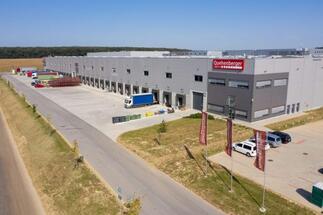
One of the largest tenants of the logistics and industrial complex of the developer GLP in Senec, the company Quehenberger Logistics, has extended the lease for another two years. The growing demand for commercial premises in the vicinity of Bratislava will also be satisfied by the newly emerging Business Zone GLP Bratislava.
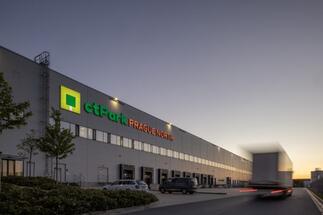
CTP, Europe’s largest listed developer, owner, and manager of industrial and logistics properties by gross lettable area (GLA), has signed three key ten-year leases in its most sustainable industrial park near Prague, comprising more than 60% of a new 32,000 sqm building that will be delivered by the end of Q2 2024 at CTPark Prague North.CTPark Prague North will welcome MEMODO, Fulfillment.cz and the Albert retail chain this year, confirming the increasingly strong demand for quality and sustainable industrial premises, which the park perfectly meets thanks to its strategic location and high sustainability standards.
In the world of industrial real estate, there is a significant shift towards sustainable and energy efficient solutions. One of the main trends is green construction, which brings a number of advantages for both investors and the environment. A key aspect of this transformation is moving away from dependence on Russian gas and moving to alternative energy sources such as heat pumps. This proved to be an effective solution for covering heat consumption in warehouses and halls, especially in the logistics sector.