1. How would you describe the current situation on the industrial and logistics real estate market in the Czech Republic?
The market stabilized after the correction in 2024, and we are currently seeing a return of activity. The volume of completed developments as well as leased space is increasing. At the same time, vacancy rates are higher but still healthy, ranging from approximately 3.5% to 5.3% depending on the quarter and methodology. The total stock is approaching 13 million sqm, with 1.5–1.8 million sqm currently under construction. After rapid growth, rental levels have rather stabilized, and incentives are becoming more important.
It remains a fact that the Czech Republic benefits from its strategic location and a relatively strong base of skilled labor. However, the pace of development is influenced by permitting processes and land availability, which is why we focus on well-prepared locations that we offer to clients at an advanced stage of the permitting process.
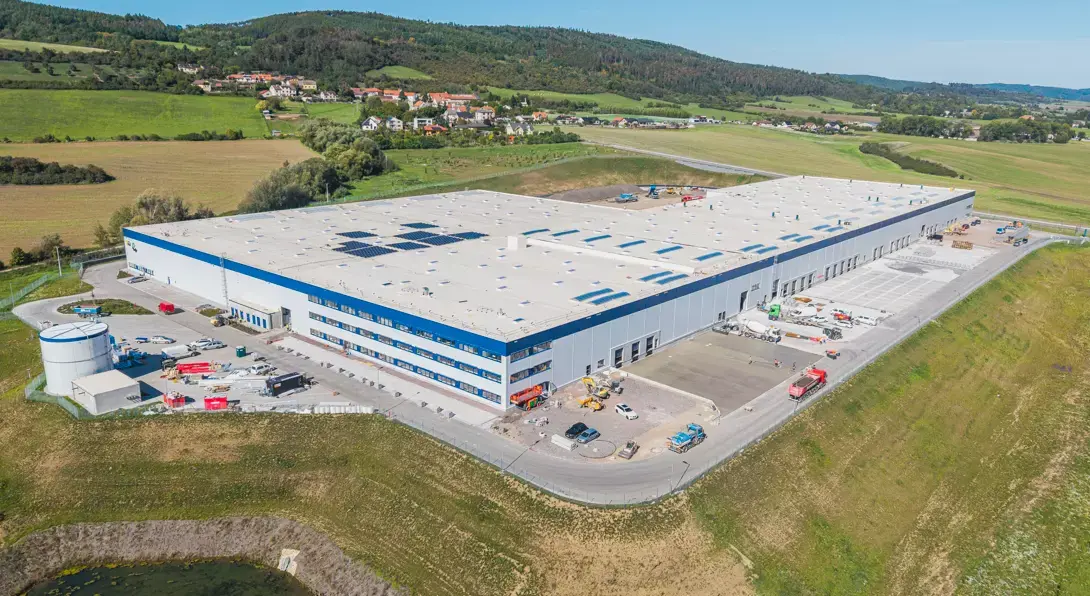
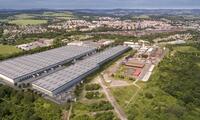
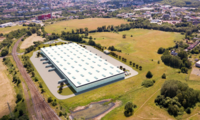
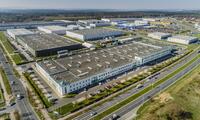
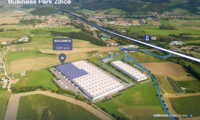
Panattoni Park Zdice, a modern Class A industrial park located on the D5 motorway between Prague and Pilsen.
Source: Panattoni
2. Who currently drives demand – logistics, manufacturing, e-commerce, or other segments?
The main drivers are manufacturing and logistics, which together typically account for around three quarters of total demand in a given quarter. E-commerce has moderated after the post-COVID surge and its share is lower than during peak years, although we are seeing a gradual recovery. Demand is also driven by large multinational companies.
Growth is also supported by the automotive sector and its supply chains (electromobility, battery components), which we see reflected in our projects, for example for ZF Automotive or WITTE.
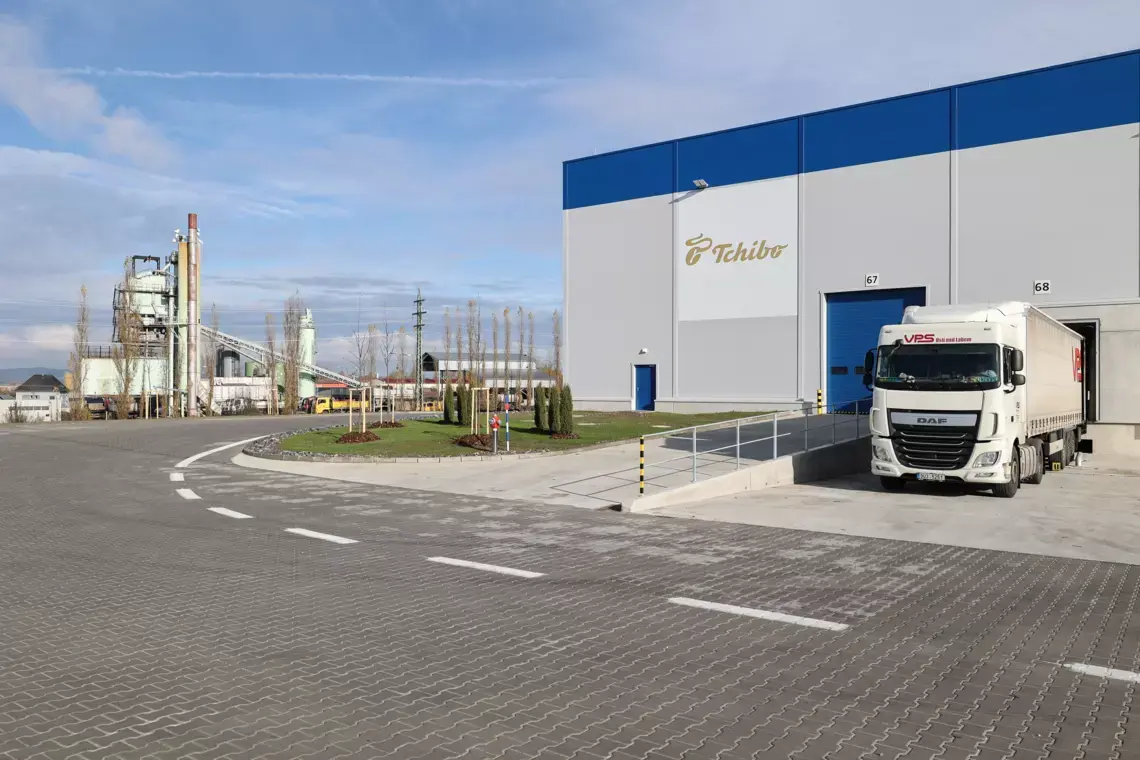
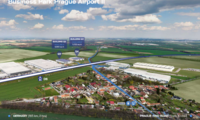
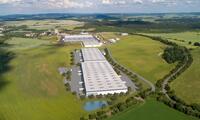
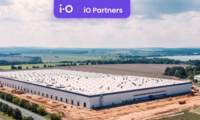
A modern logistics center serving international tenants in Western Bohemia.
Source: Panattoni
3. How are tenant requirements evolving in terms of technical standards and flexibility?
Tenants today commonly require energy efficiency, lower operational emissions, and high-quality ESG reporting. Therefore, in our projects we target at least a BREEAM New Construction rating of Excellent. More than half a million square meters of our developments have even achieved the highest possible rating, Outstanding. In addition, there is growing emphasis on modularity and innovative building materials.
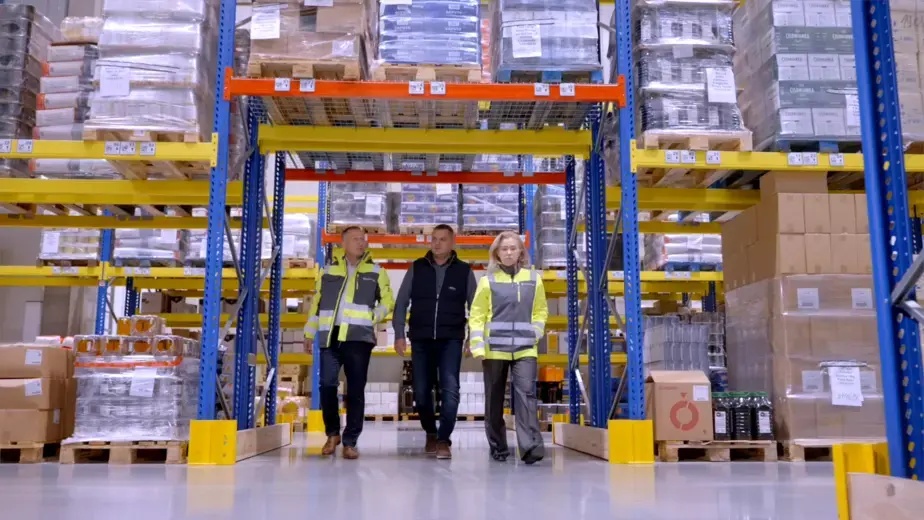
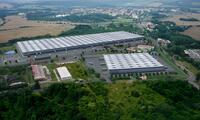
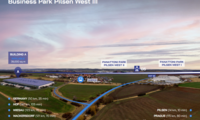
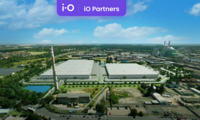
Modern warehouse spaces with a focus on efficiency, automation, and flexibility.
Source: Panattoni
4. What is the role of BTS (Build-to-Suit) within Panattoni’s portfolio in the Czech Republic?
At Panattoni, we do not develop speculatively but primarily build according to the specific requirements of future industrial users. BTS has long been a key pillar for us. It allows us to precisely meet operational and energy needs of both manufacturing and logistics tenants and significantly shorten time-to-operation.
5. Which regions in the Czech Republic currently offer the greatest potential for further development?
The Moravian-Silesian Region offers significant potential due to the availability of land suitable for industrial development. It also benefits from a long industrial tradition, a qualified workforce, and robust transport and energy infrastructure. Rental levels are also considerably lower compared to Prague.
Regions close to Germany, such as Ústí, Plzeň, or Karlovy Vary, remain very attractive. Demand in Prague and Central Bohemia is consistently high, but the availability of suitable land is very limited.
6. What are the main challenges for new developments – permitting, infrastructure, land availability?
The key factors are the speed and predictability of the permitting process. Today, we need to offer projects at least at the stage of a permitted development to be able to guarantee delivery timelines comparable to neighboring Poland.
7. How does Panattoni approach sustainability and ESG in its Czech projects?
Sustainability is essential for us, as it is for our clients. In the Czech Republic, we are leaders in sustainable industrial development. We have over 1.4 million sqm certified under the BREEAM New Construction standard and have delivered the first carbon-neutral building. We are also developing the first large warehouse building using timber trusses.
It is important to emphasize that we approach sustainability comprehensively, as efficient allocation of resources – financial, human, and natural. Sustainable buildings simply bring operational cost savings for our clients. Thanks to our initiatives, from 2026 there will also be broader legislative opportunities to use non-buildable areas within parks for photovoltaic installations.
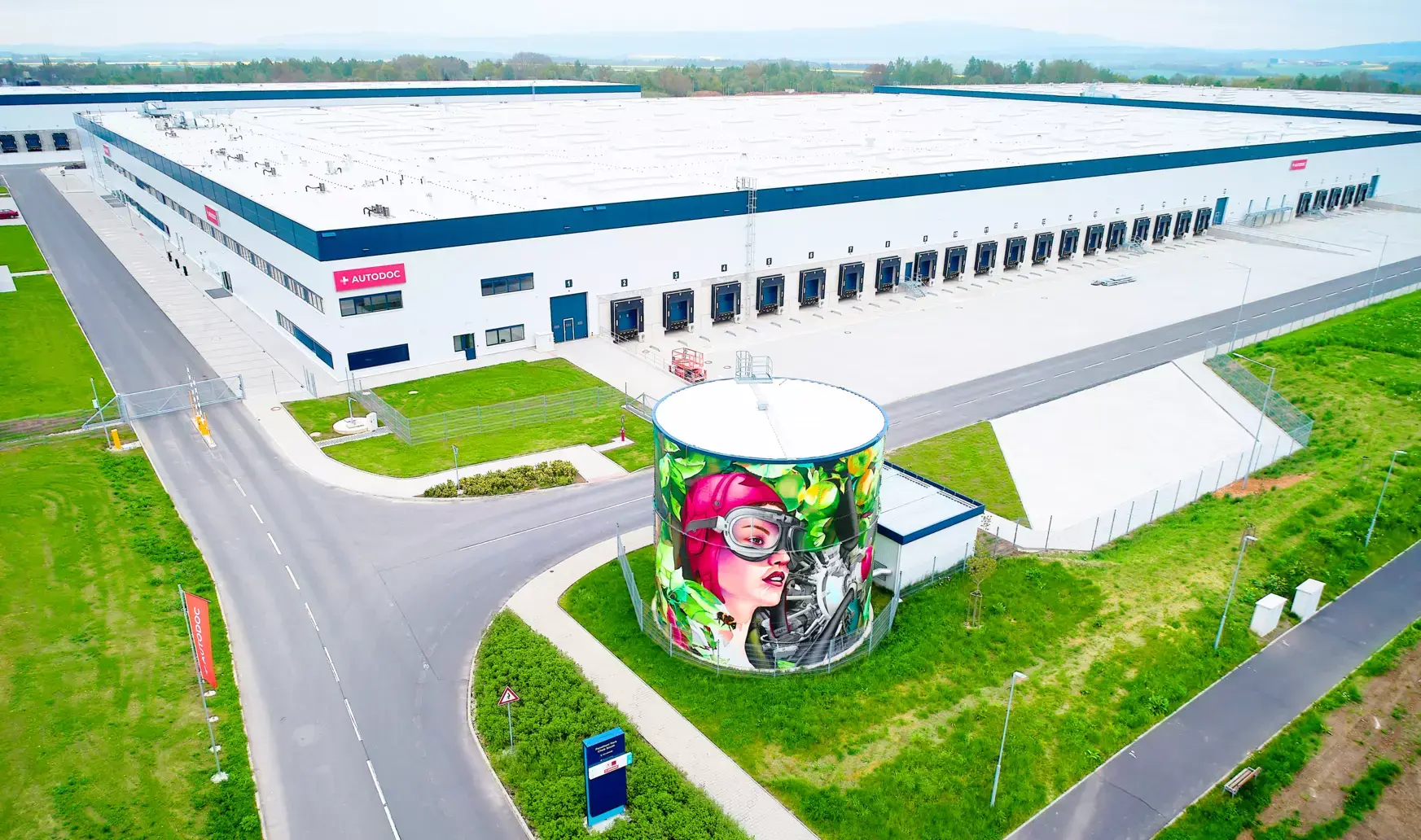
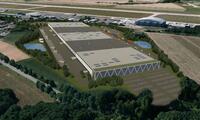
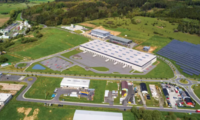
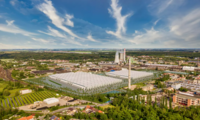
Sustainable industrial development with a focus on energy efficiency and ESG standards.
Source: Panattoni
8. How do tenants respond to energy efficiency and “green” solutions?
We observe a very practical approach – green features must deliver lower costs and higher operational reliability. That is why there is demand for renewable energy sources, smart building management systems, and efficient water usage.
9. Are changes in supply chains and geopolitics influencing client decisions?
Yes. Following a series of geopolitical events, from the COVID-19 pandemic to ongoing conflicts, we are seeing production moving closer to end markets (nearshoring) and a greater focus on supply chain resilience. Unfortunately, some clients are also being negatively affected by the current situation in the Middle East.
10. Do you expect a return of speculative development, or will BTS and pre-leasing continue to dominate?
We see a selective return of speculative development in the strongest submarkets and among developers with well-prepared land. However, the market remains disciplined and continues to prefer pre-leasing. At Panattoni, we only develop speculatively where there is clear demand.
11. What trends will shape the Czech market over the next 2–3 years?
The trend of increasing European self-sufficiency will continue, meaning production and logistics will move closer to target markets. Although sustainability may not be the top political priority, businesses will continue to demand sustainable solutions and move away from fossil fuels towards electrification.
We will also see whether the new Building Act accelerates permitting processes. Another ongoing trend is the centralization and automation of warehouses, driving demand for large-scale big-box facilities.
12. What advice would you give to companies considering expansion or new warehouse space in the Czech Republic?
It is advisable to work with a global company like Panattoni, which has extensive experience across international markets and can offer multiple solutions within the Czech Republic. We have prepared locations across the country, including key areas such as Prague and Central Bohemia, and we are able to deliver tailor-made solutions based on specific client requirements.

O Panattoni
Panattoni has been operating on the Czech market since 2007. During this time, it has managed to establish long-term business relationships and win world-famous clients such as Amazon, Tchibo, KION and DHL. Thanks to its approach, the company takes the time to approach each business opportunity individually and strives to find
a tailor-made solution that benefits all clients and the area in which it operates.
It has a long-standing commitment to sustainable construction and its environmental impact as a member of the Czech Green Building Council.