1) How would you describe the current logistics rental market in Czechia?
The Czech logistics market remains fundamentally healthy and resilient. After a period of exceptionally tight supply, the market is gradually normalising: vacancy has risen from the ultra-low levels seen in previous years, but remains moderate by historical standards, while occupier demand continues to be solid. According to recent market data, Czech modern industrial stock has surpassed 13.2 million m² and vacancy stood at around 4.8% at the end of Q4 2025, with leasing activity supported by manufacturing, retail, e-commerce and 3PL occupiers.
2) How is rental occupancy evolving, and what trends are you seeing in tenant demand and requirements?
Occupancy remains high in well-located, high-quality parks. In our Czech portfolio, Prologis closed 2025 with 98% occupancy, 2% above the market average, and achieved a 97% retention rate, which shows that customers continue to value quality locations and service. What we see increasingly is that customers are not just looking for space; they are looking for operational reliability, energy efficiency, flexibility in unit size, strong transport connectivity, and solutions that help reduce total occupancy cost. There is also more focus on technology, and infrastructure that supports automation, electrification and faster fulfilment.
3) Which types of tenants are driving demand in the industrial real estate sector?
Demand is being driven by a mix of manufacturing, 3PL logistics providers, retail and e-commerce. E-commerce remains especially important because it continues to increase pressure on supply chains to be faster, more flexible and closer to end customers. We also see growing relevance of segments such as online grocery and other logistics-intensive formats that need high service levels and strong last-mile or regional distribution capabilities.
4) How do you see the development of industrial real estate in Czechia over the next 3–5 years?
We expect the industrial real estate market in Czechia to remain fundamentally strong, supported by several long-term structural trends – continued supply-chain regionalisation and nearshoring, further growth in e-commerce, and deeper adoption of digital and AI-enabled operations.
One of the key drivers will be the regionalization of supply chains and nearshoring. Following geopolitical tensions and trade disruptions many companies are seeking to increase resilience by locating production and distribution closer to European end markets. Thanks to its central location, strong industrial base and developed logistics infrastructure, Czech Republic is well positioned to benefit from this shift. Demand will likely remain strongest in the main logistics corridors around Prague, Brno and Plzeň, as well as along major motorway connections.
Another important factor is the continued expansion of e-commerce. According to Prologis Research e-commerce in Europe is expected to grow by roughly 5% annually, potentially generating additional demand of about 1.4–1.9 million sqm of warehouse space per year across the region over the next five years. By the end of 2026, e-commerce companies are expected to account for around 25% of new logistics leases globally, confirming that this is a long-term structural driver of demand.
Finally, the sector will also be shaped by the growing adoption of digital technologies and artificial intelligence in logistics operations. According to Prologis Research, around 70% of global companies already use AI to optimize logistics processes. By 2030, AI is expected to support or even drive most logistics-related decisions, including demand forecasting, inventory management and route optimization. This will increase demand for modern logistics facilities capable of supporting advanced automation and data-driven operations.
Overall, these trends suggest that the Czech industrial real estate market should continue to develop steadily, with demand increasingly focused on modern, well-located and technologically advanced logistics assets.
5) What sets Prologis apart from other logistics and industrial real estate providers in the region?
In Prologis, we combine the scale, location quality and high-quality customer-focused services. In the Czech Republic, we manage a portfolio of 1.42 million m² across 110 buildings and 94 customers, and in 2025 we signed 65 leases and renewals totaling 501,000 m² while maintaining very high occupancy and retention.
Beyond real estate itself, we focus strongly on value-added services and through our platform Prologis Essentials we provide comprehensive and cost-efficient warehouse solutions that enhance operational and energy performance – from LED lighting, racking systems and material handling equipment to EV charging stations and other energy-efficient installations, including heat pumps and possible on-site solar production. Our objective is to deliver a fully integrated infrastructure that enables customers to focus on their core business. We stay close to customers through, regular communication and by tailoring solutions to how their operations are changing, which is one reason our retention levels remain so high.
6) Could you provide an overview of your key parks: Chrášťany, Rudná, Ostředek, and Pilsen-Štěnovice, and their main advantages for tenants?
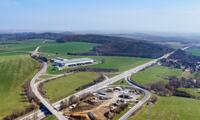
Each of these parks addresses a slightly different logistics need. Prague-Chrášťany is strategically located adjacent to the D5 motorway and just 10 minutes from Václav Havel Airport and offers convenient access to the capital and major transportation routes. The site’s proximity to key infrastructure makes it suitable for various logistics operations, including last-mile distribution – an increasingly important feature in the context of growing e-commerce demand. The park now comprises three Class A buildings totaling about 30,000 m².
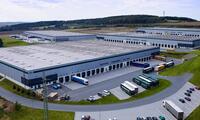
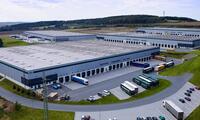
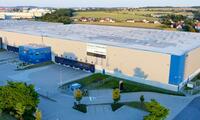
Prologis Park Prague-Rudná is located in a prime area on the outskirts of Prague, with excellent transport accessibility and direct access to the D5 motorway, around 20 km from central Prague and about 12 km from Václav Havel Airport. The park in Rudná, with 19 buildings covering an area of 237,000 m², is among the largest Prologis parks in the Czech Republic, which makes it particularly attractive for large-scale domestic and international distribution.
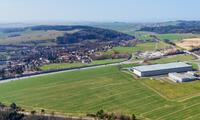
Prologis Park Prague Ostředek sits directly on the D1 corridor near Exit 34; the existing park totals about 42,700 m² with room for two further buildings totaling 26 000 m2, making it well positioned for nationwide distribution between Prague, Brno and Ostrava.
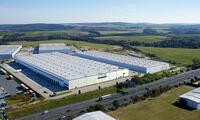
Prologis Park Pilsen-Štěnovice benefits from proximity to Plzeň, direct access to the D5 corridor and a location about 70 km from the German border, which is ideal for cross-border and western-oriented logistics; It is a Class A park of approximately 59,000 m² across three modern buildings.
Overall, the advantage of this network is that customers can choose between Prague metropolitan access, D1 national connectivity and D5/Germany-facing distribution.
7) What services or support does Prologis provide to tenants in these parks, and how do you ensure their needs are met?
Our goal is to help customers run their operations as efficiently and reliably as possible, not just provide warehouse space. Through Prologis Essentials platform, we offer a turnkey solutions based on a detailed analysis of the customer’s operational needs, including LED lighting of a new generation, racking systems, material-handling equipment, EV charging, smart metering systems and other energy-efficient upgrades that help customers optimise their operations and reduce energy costs. On site, our parks provide professional property management and infrastructure that supports day-to-day operations.
8) Are there any sustainability or technological innovations implemented across these parks?
Sustainability and smart building features are key priorities across our parks, and we invest significant resources each year in the renovation and modernization of our facilities. Every new Prologis building meets BREEAM certification standards and incorporates the latest eco-friendly solutions and technologies by default.
For example, the newest building in Chrášťany is equipped with heat pumps that provide heating for both warehouse and office spaces without reliance on natural gas delivered directly to the warehouse, as well as modern LED lighting with intelligent sensors. The building’s roof is prepared for photovoltaic panel installation, and an advanced smart metering system allows continuous monitoring and optimization of energy consumption.
Another example is Prologis Park Prague-Rudná – since its acquisition in 2014, we have invested over CZK 750 million in its modernization and enhancement. This investment transformed the park into one of the leading logistics hubs, featuring modern LED lighting systems, energy-efficient heating, upgraded roofs with improved insulation, and reinforced security measures. In addition, a smart metering system was implemented to optimize energy usage, making the park one of the most sought-after logistics locations on the outskirts of Prague.
9) How has tenant demand evolved for these specific parks, and what types of tenants are most interested?
Demand has become more targeted and more operations-driven. For Chrášťany, interest is particularly strong from urban distribution, retail and e-grocery operators because of the Prague catchment area and the need for fast delivery. Rudná tends to appeal strongly to 3PL providers, retailers and companies that need excellent motorway and airport connectivity for both domestic and international distribution. Ostředek is attractive for occupiers looking for central positioning on the D1 spine and efficient access across the Czech Republic. Pilsen-Štěnovice is naturally attractive to manufacturing-linked users, suppliers and logistics operators with strong western or Germany-oriented flows such as the automotive industry.
10) Are there any upcoming projects, expansions, or improvements in these parks that you would like to highlight?
In the Czech Republic, Prologis is prepared to begin new construction totaling up to 178,000 m² in key locations such as Prague and Pilsen, demonstrating confidence in future demand. At the park level, Ostředek has documented potential for the addition of two more buildings. Chrášťany recently delivered a new sustainable building, while the broader focus across the portfolio remains on selective development, operational upgrades, and value-added services rather than speculative expansion alone. Future construction will be increasingly focused on projects tailored to the individual needs of customers.