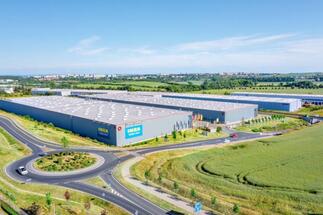
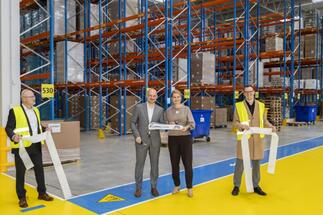
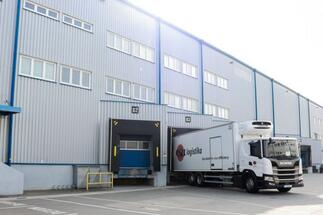
Developer Segro has extended the contract with tenant Ikea in its industrial park in Hostivica. The unit serves as a delivery warehouse for customers who purchased goods from the Scandinavian chain in a nearby store in Prague's Zličín. The Ikea distribution warehouse uses an area of 6,720 square meters. The real estate consulting company Cushman & Wakefield participated in the extension of the lease agreement.
The modern distribution area in the village of Okrouhlá in Chebsko is equipped with heat pumps, underground water tanks and the possibility of installing photovoltaic panels on the roof. Charging stations for electric cars will also be added to the outdoor parking lot. B2 Assets takes care of the management and maintenance of all technical networks, including electricity, water, air conditioning and fire protection. "The new building has one specific feature, namely its own gas tank in case of a gas crisis. A number of safety rules and technical requirements for maintenance are associated with the operation of a gas storage tank - we are able to ensure all of this in addition to the normal management of the facility," says Václav Bartoš, CEO of B2 Assets.
Part of the modern logistics hall in Prologis Park Prague D1 is an automatic packaging line with a roller track, which enables fast packaging of pallets and gluing of labels. The process of packing goods will be easier than before. The time of at least two co-workers is saved, who can devote themselves to other activities. The capacity of this line will completely ensure the high demand of the dm drogerie markt network of stores.
Colliers, a leading provider of diversified professional services in commercial real estate and investment management, has announced a significant personnel change. Tewfik Sabongui, the current CEO of the Czech branch of Colliers, will expand his competences and take over the management of the Slovak representative office of this important real estate company. Richard Urvay, the current managing director of Colliers in Slovakia, will leave his position by the end of April to take up a new role on the client side.
Industrial developer Panattoni together with investment group Accolade announce the handover of a fully completed hall in Panattoni Park Cheb East. Part of the building with a total floor area of 61,000 square meters is already used by a tenant operating in the automotive industry. The building is ready for expansion by another 18,000 square meters and aspires to the highest level of assessment in the international sustainability certification BREEAM New Construction.
ESA Logistika opened a new warehouse for dry goods in Senec, near Bratislava. The operation is located in the P3 logistics park in the immediate vicinity of the D1 highway and has a total of 12,650 square meters of warehouse space for 15,400 pallet spaces. Approximately 20 employees will find work here. ESA logistics already operates a warehouse with a capacity of 19,500 pallet places in the same location. In total, the company employs 140 people at the site in Senec.
QR codes are currently booming. You can find them practically everywhere: on information posters, advertising flyers and tickets to cultural events. In addition, a number of restaurants have started placing them on tables for contactless menus and payments during the covid-19 pandemic. Anyone who knows the use of QR codes from practice knows how fast it is to scan and retrieve information from them. Thanks to this, they have spread from customers to industries, including construction. Adam Heres Vostárek, an expert on the digitization of processes in the construction industry from the company PlanRadar, explains how this technology can be effectively used in construction and real estate management.
In the world of industrial real estate, there is a significant shift towards sustainable and energy efficient solutions. One of the main trends is green construction, which brings a number of advantages for both investors and the environment. A key aspect of this transformation is moving away from dependence on Russian gas and moving to alternative energy sources such as heat pumps. This proved to be an effective solution for covering heat consumption in warehouses and halls, especially in the logistics sector.