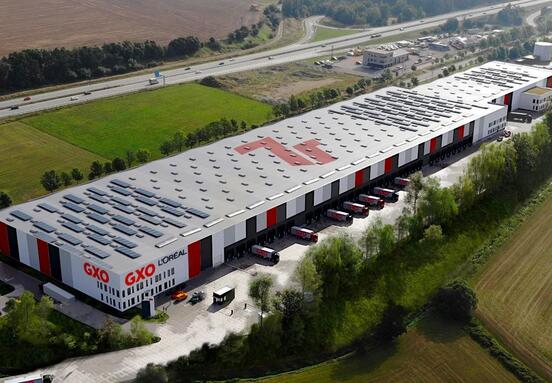
According to current market data, Hungary offers more than 6 million m² of modern industrial space for logistics and manufacturing, which represents roughly half of the Czech market. However, the key difference lies in availability and occupancy levels, with Hungary reporting a vacancy rate of approximately 12%, around double that of the Czech Republic.
“The difference is mainly driven by vacancy levels, which are significantly higher in Hungary. On the other hand, the stock of modern industrial space is about half of the Czech level,” according to market analysis by 108 Real Estate.
Automotive as the Key Market Driver
One of the main pillars of the Hungarian industrial market is the automotive sector. The country hosts major global manufacturers, including Audi, Suzuki, Mercedes-Benz, and Opel/Stellantis, as well as key suppliers such as Bosch, Continental, and ZF.
In 2025, the automotive segment accounted for nearly 50% of all leasing transactions, confirming the strong dependence of the market on manufacturing and its supply chains.
Strong Role of Development and E-commerce Expansion
Among the most active developers in Hungary are CTP, HelloParks, Prologis, GLP, Panattoni, and VGP. Czech developers are also playing an increasingly active role in shaping the market.
E-commerce and urban logistics are gaining importance, driving demand for last-mile distribution facilities, particularly around Budapest.
Leasing Activity Comparable to the Czech Republic, but a Different Market Structure
While the Czech Republic benefits from lower vacancy rates and a more stable demand structure, Hungary shows a higher share of pre-leases and greater sensitivity to industrial cycles.
Infrastructure development also plays a key role, with expanding transport corridors toward the Balkans and Central Europe further strengthening Budapest’s position as a regional logistics hub.
What This Means for the CEE Region
The Hungarian market development reflects a broader Central and Eastern European trend: strong concentration of demand in major logistics hubs, growing importance of the automotive and e-commerce sectors, and diverging market dynamics across countries.
The Czech Republic continues to benefit from stronger fundamentals in terms of occupancy and stability, while Hungary offers more growth potential, albeit with higher volatility.