Data Centers as a New Driver of Logistics Demand
Data centers are among the fastest-growing segments of commercial real estate in Europe. Their expansion is primarily driven by the rise of AI workloads, cloud services, and accelerating digitalization across industries.
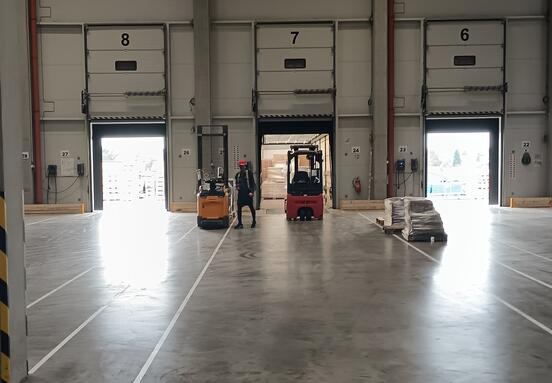
However, the ripple effects extend beyond the data center sector itself. Industry analysis shows that the development of new data centers is generating significant additional demand for warehouse and logistics space across Europe, often amounting to hundreds of thousands of square meters. These facilities are used to store server components, cooling systems, electrical equipment, and other critical infrastructure required during construction and operation.
Logistics Becomes Part of Digital Infrastructure
Traditionally, logistics real estate has been associated with e-commerce, automotive supply chains, and retail distribution. Today, it is increasingly becoming a core part of digital infrastructure.
Building a data center requires highly complex supply chains, including construction materials, high-tech hardware, electrical systems, and advanced cooling technologies. This creates sustained demand for storage and distribution facilities located near major transport corridors and urban hubs.
As a result, logistics is no longer just about consumer goods—it is now deeply integrated into the expansion of the digital economy.
AI Growth Accelerates Market Expansion
The boom in artificial intelligence is significantly increasing demand for computing capacity, driving a wave of new data center development across Europe. At the same time, the market faces constraints related to energy availability, land supply, and grid infrastructure, which further intensifies pressure on efficiency and logistics coordination.
Europe is currently experiencing a strong expansion cycle in data center development, supported by major investments into digital infrastructure and energy systems. This growth is expected to continue over the coming years as AI adoption accelerates across sectors.
Impact on Central Europe and the Czech Market
Central and Eastern Europe is gradually becoming a more important part of Europe’s data center ecosystem. The Czech Republic already hosts dozens of operational facilities, with additional projects under development or construction.
This expansion is also creating indirect opportunities for logistics developers. Warehouse operators benefit from increased demand for storage and distribution space connected to technology hubs, industrial zones, and major transport corridors.
A New Type of Industrial Real Estate Demand
While e-commerce previously acted as the dominant driver of logistics demand, the sector is now being complemented by digital infrastructure.
Companies involved in data center construction and operation require:
- storage for IT equipment and server components
- logistics hubs for rapid delivery of technology systems
- assembly and servicing facilities
- regional distribution points for technical teams
This shift is gradually reshaping demand patterns in the industrial real estate market.
Long-Term Structural Change in the Logistics Sector
Experts suggest that the connection between data centers and logistics is not a short-term trend, but a structural shift in how digital infrastructure is built and maintained.
As AI and cloud services continue to expand, they will increasingly influence not only technology companies but also warehouse developers, industrial property owners, and real estate investors.
If this trend continues, logistics markets across Europe—and particularly in Central Europe—may benefit from one of the most significant structural transformations in the sector over the past decade.